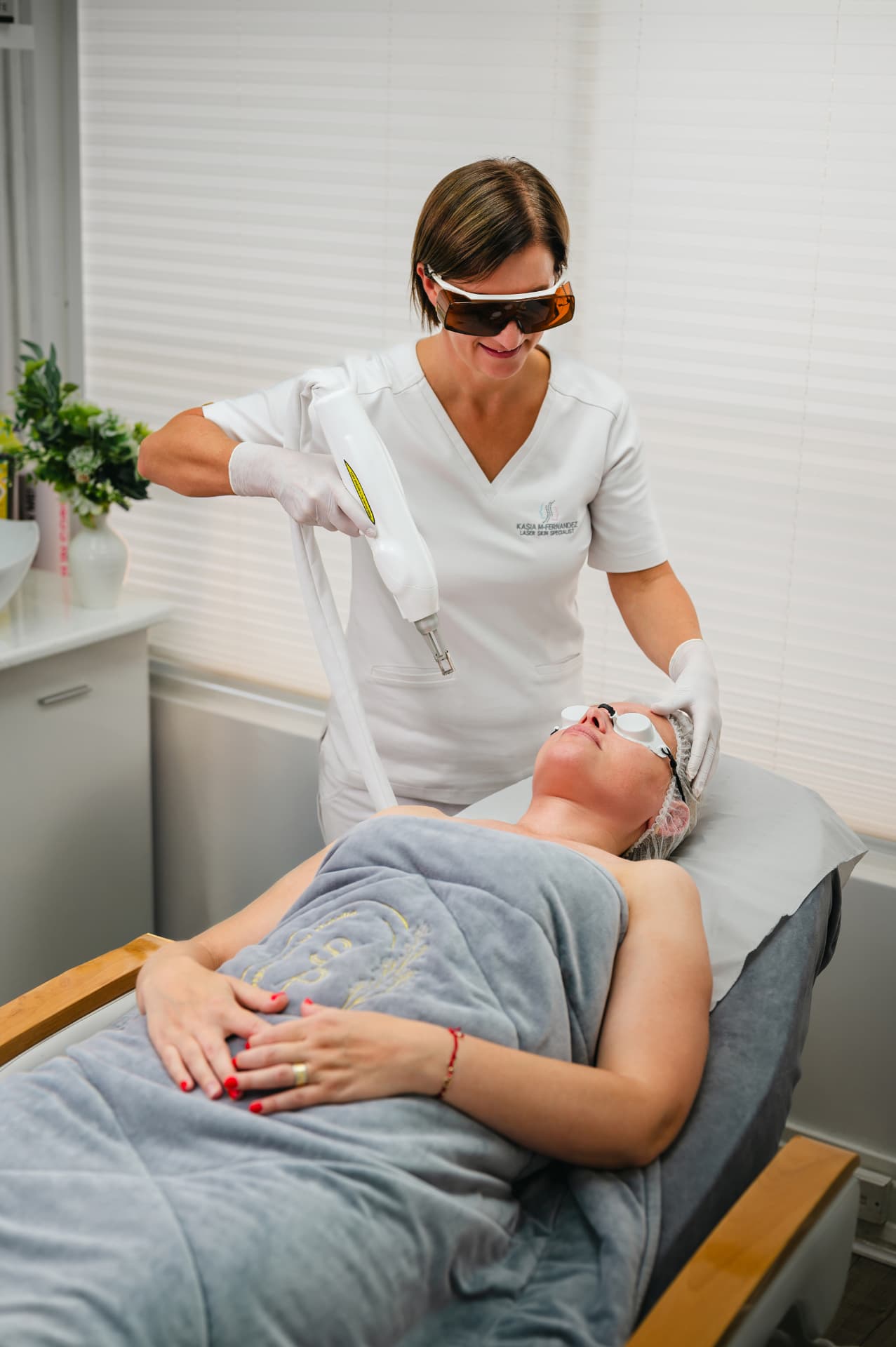
The Nd:YAG laser works at a wavelength of 1064 nanometres, which passes through the surface of the skin and reaches deeper than most light-based treatments. Controlled heating of the deeper layers is used to encourage the skin's own renewal, with the aim of a firmer, smoother and more even-looking complexion over a course.
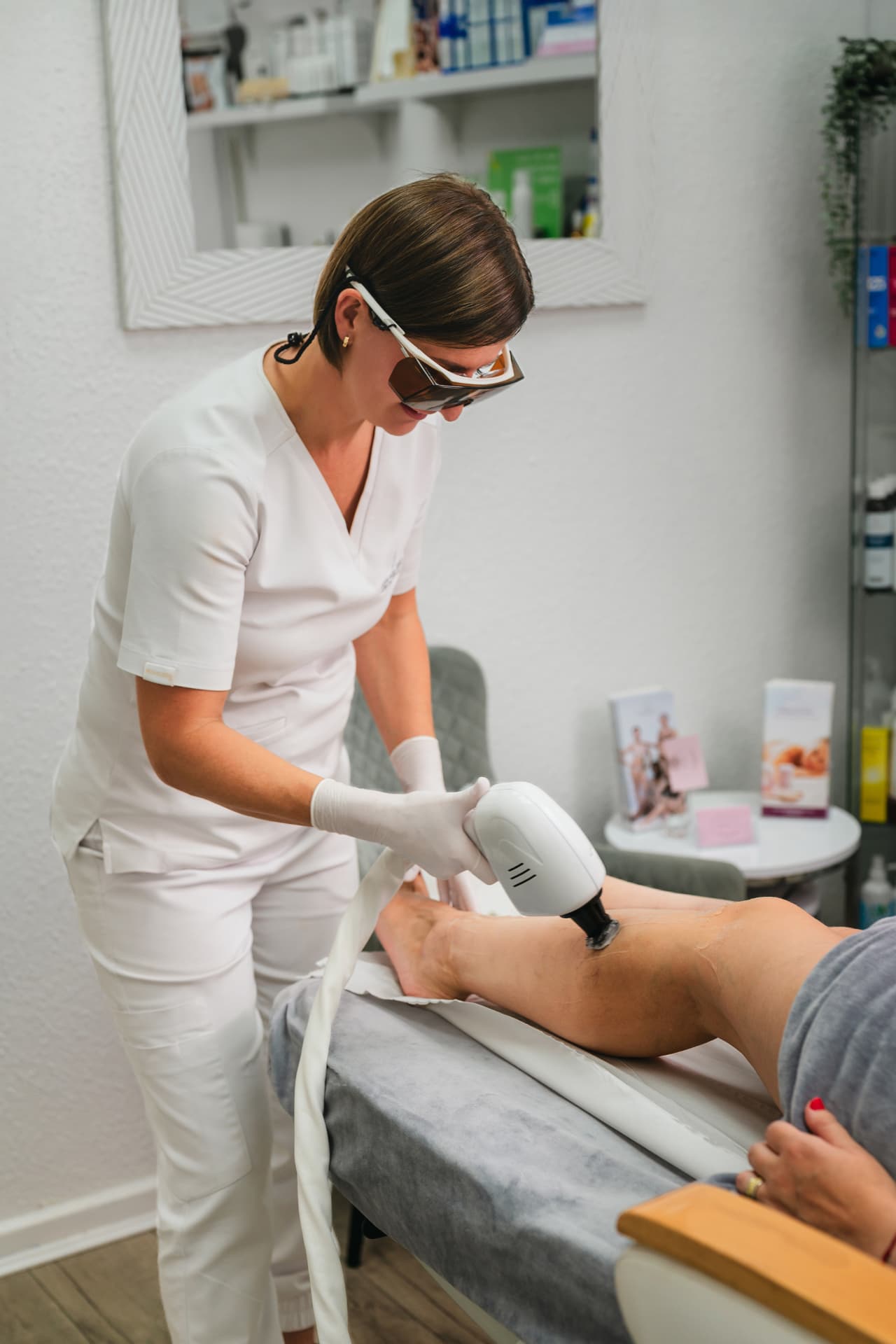
Because this wavelength is absorbed less by surface pigment, it is often considered for a wider range of skin tones than IPL — always after a patch test. The same laser can target the red colour in small facial vessels, such as thread veins.
It is a non-ablative treatment: the surface of the skin stays intact, so most clients return to their day straight away with some temporary redness.
What Nd:YAG rejuvenation is used for
At the clinic, Nd:YAG skin rejuvenation is offered for skin that is losing firmness and looks tired, for the look of fine lines and enlarged pores, and for visible thread veins and redness on the face. The same laser technology is used for ruby spot (cherry angioma) removal, which has its own page.
Your consultation will establish which concern to prioritise and whether Nd:YAG, CPL, IPL or a different treatment is the most suitable starting point.
How many sessions?
Skin rejuvenation is usually planned as a course of several sessions about four weeks apart, because collagen renewal takes time. Thread veins may need one or more sessions, depending on their size and number. You will be given a personal plan after your consultation.
Who carries out your treatment
Laser and light treatments at the clinic are carried out by its specialist laser skin therapist, who works alongside Natalia in Corby. Every course starts with a consultation, a medical questionnaire and, where appropriate, a patch test, so that settings can be chosen for your skin type and the concern you want to work on.
If a treatment is not right for your skin, you will be told so and offered a safer alternative.
Listed on the clinic menu as: Nd:YAG skin rejuvenation.
What it may help with
- Skin that is losing firmness and looks tired
- The look of fine lines and enlarged pores
- Visible thread veins and redness on the face
- Overall skin quality, as part of a course
What happens during treatment
- 1.Consultation and patch test
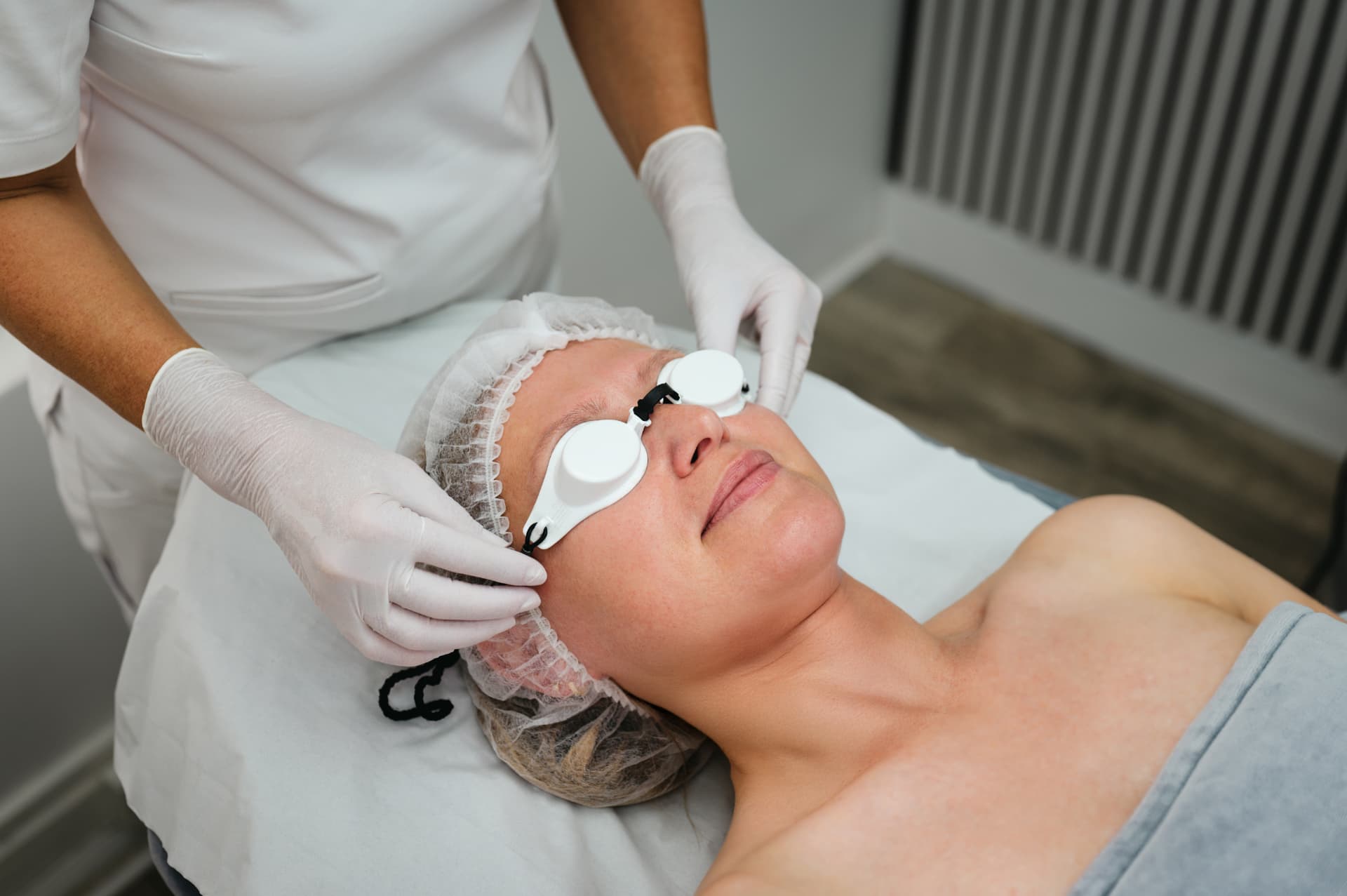
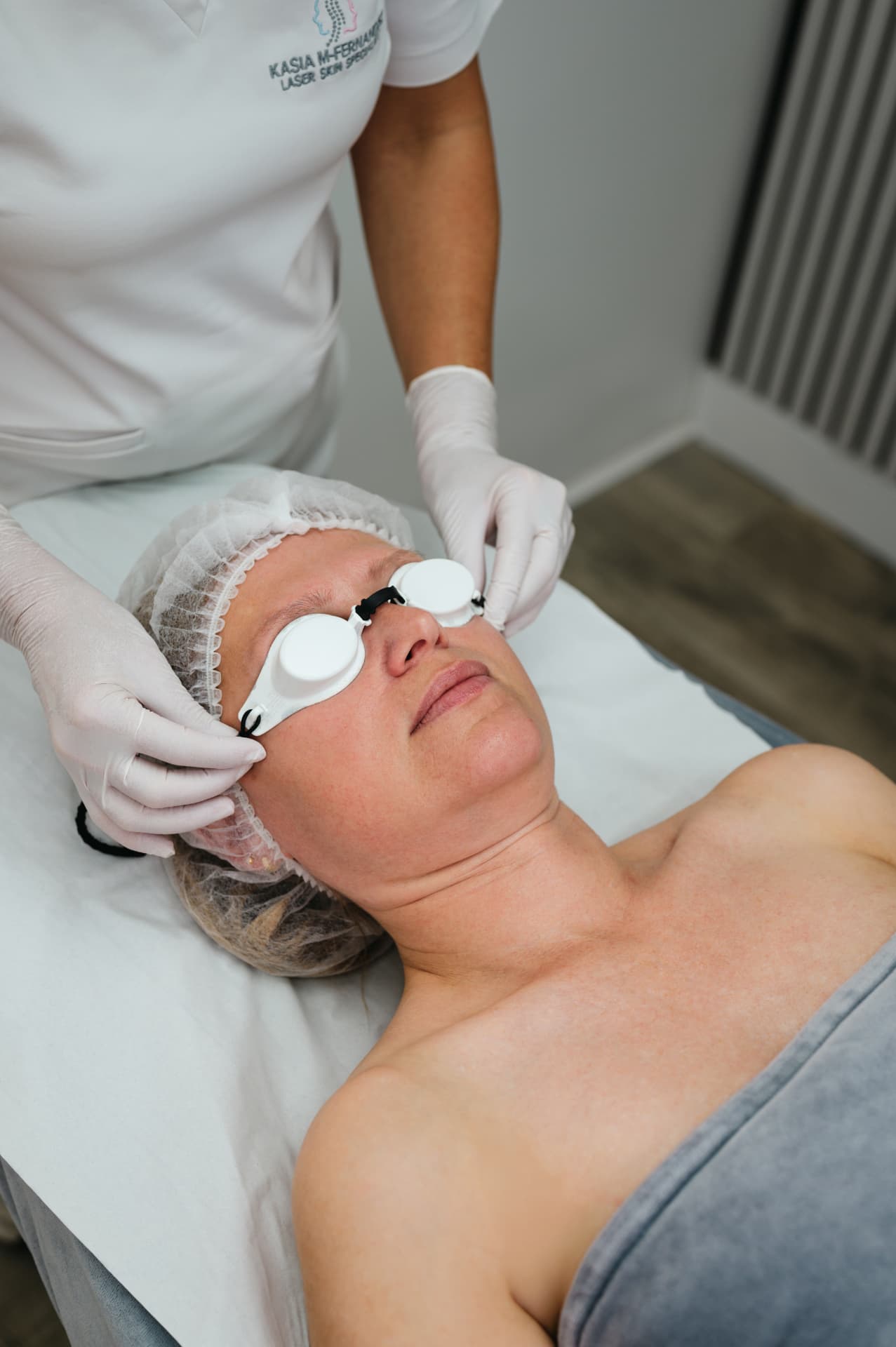
- 2.Cleanse and protective eyewear
- 3.Laser passes over the area, with cooling
- 4.Soothing product and SPF
Aftercare
- The area may feel warm, like mild sunburn, for a few hours — a cool compress can help
- Some redness or swelling is normal; treated vessels can look darker or bruised for several days before fading
- Avoid hot baths, saunas, massage and strenuous exercise for 2–3 days
- Use a gentle cleanser and moisturiser; avoid scrubs, retinoids and acids until the skin has settled
- Avoid sunbeds and strong sun exposure, and wear a broad-spectrum SPF 30–50 daily.
Who should not have this treatment
This list is not exhaustive. Please share your full medical history and medication at consultation; you may be asked for GP clearance.
- Pregnancy
- Recent tanning, sunbed use or fake tan in the area
- Photosensitising medication (please list all medication at consultation)
- History of keloid scarring
- Epilepsy triggered by light
- Active skin infection, eczema or open wounds in the area
Results and expectations
Every skin is different. Results vary between individuals and are not guaranteed. Natalia will explain what is realistic for you, how many sessions might be advisable and any risks before you go ahead.