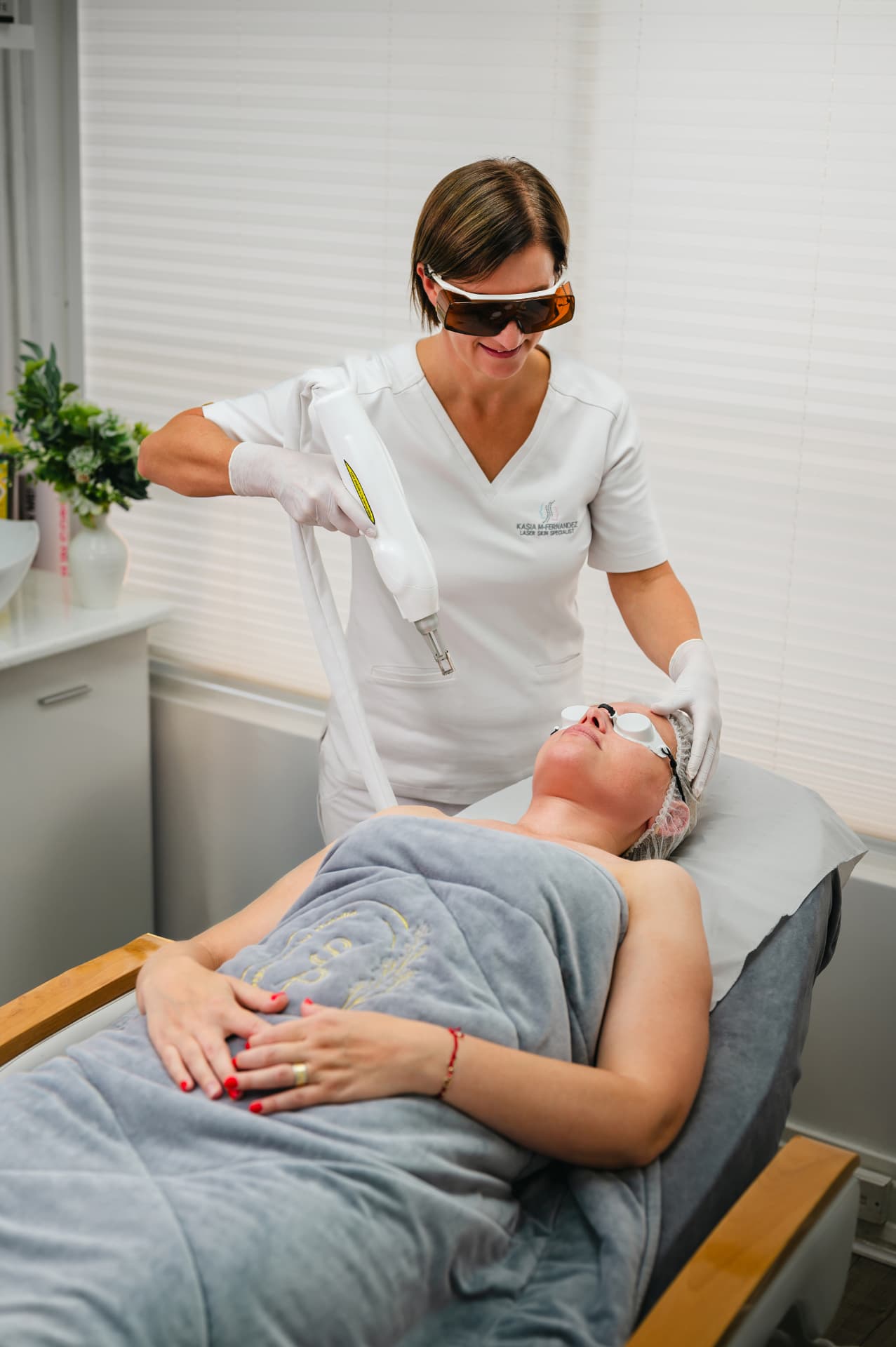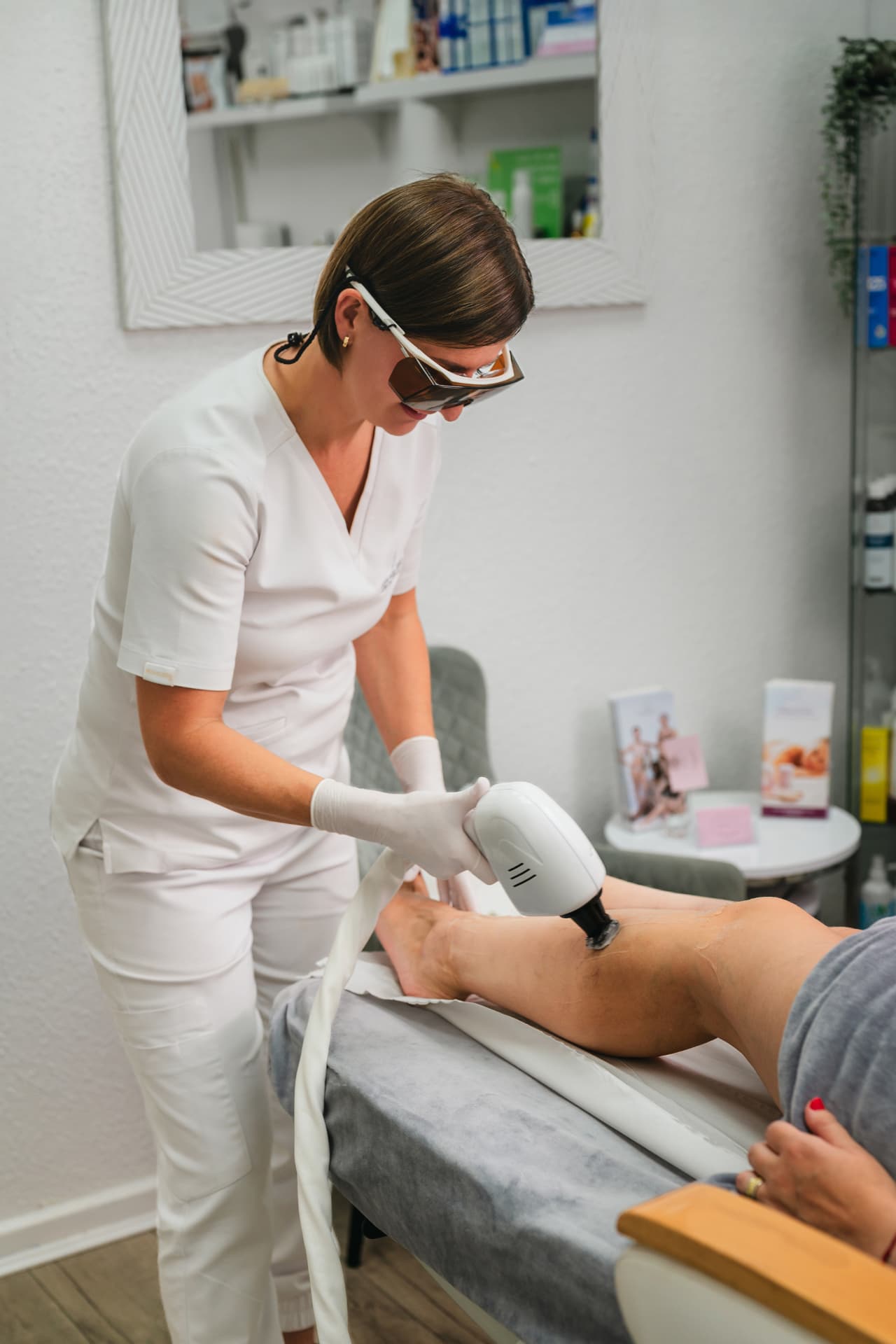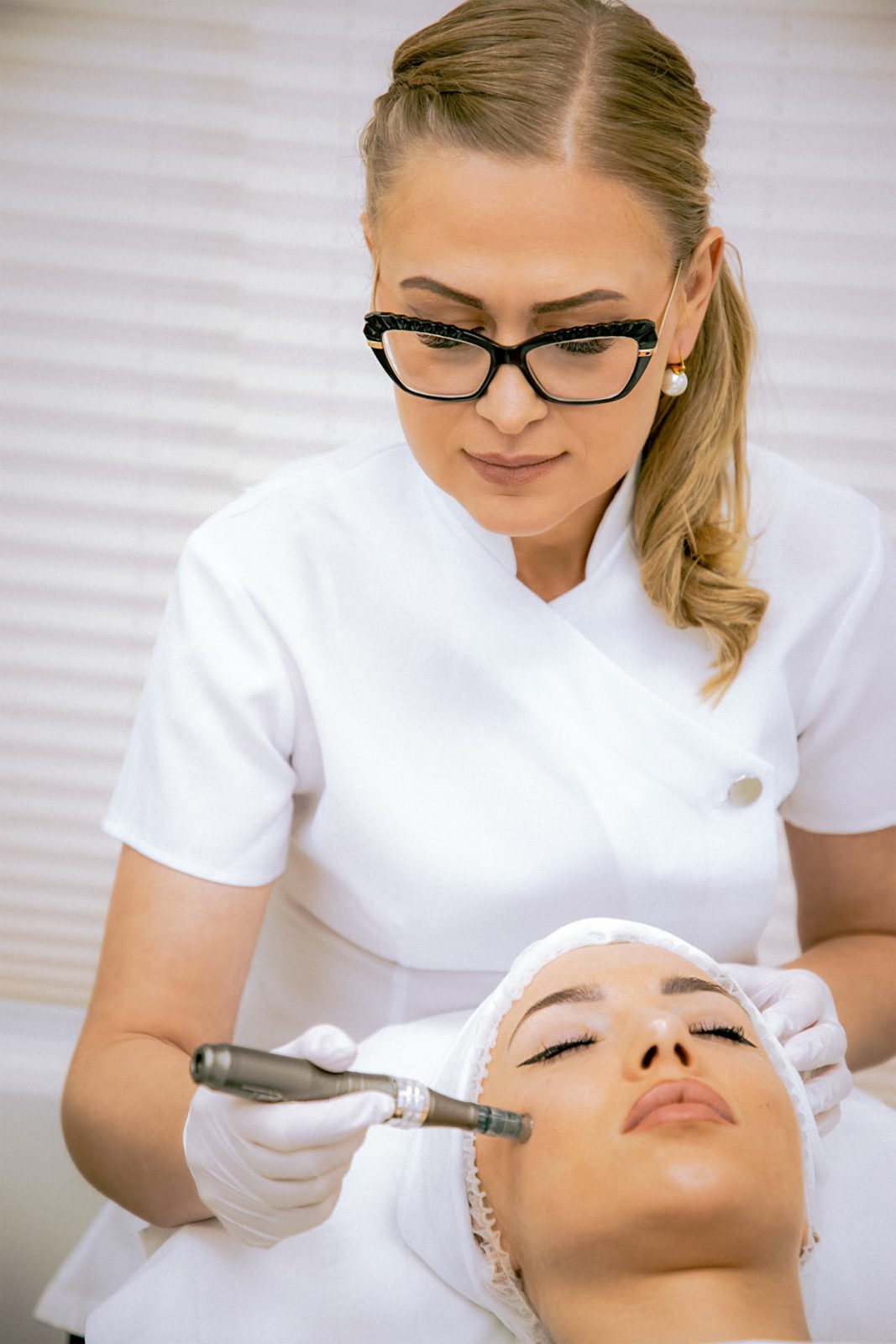
The Er:YAG (erbium) laser works at a wavelength that is strongly absorbed by water in the skin. In fractional mode, it treats a grid of microscopic columns, removing tiny areas of the surface while leaving the skin between them intact. This is designed to start the skin's own repair process and support collagen renewal.
Because it resurfaces the skin, Er:YAG is the most intensive option on the clinic's laser menu. It is chosen for the look of uneven texture, fine lines and wrinkles, acne scarring and sun damage, and it can be used on the face, neck, chest and backs of the hands.
It needs more recovery time than light-based treatments, and careful aftercare. A thorough consultation and patch test always come first.
What to expect from recovery
Straight after treatment, the skin usually feels hot, like sunburn, for a few hours. Redness, swelling and small pinpoint marks are normal for around five to seven days, followed by fine flaking as the skin renews. Plan treatment for a time when you can stay out of the sun and go without make-up for several days.
Recovery varies with the depth chosen and with your skin. You will be given written aftercare and a gentle home-care routine.
How many sessions?
Some clients choose a single session; texture and scarring often need a short course spaced several weeks apart to allow full healing. Changes continue to develop for several months as collagen renews. Results vary and are not guaranteed.
Who carries out your treatment
Laser and light treatments at the clinic are carried out by its specialist laser skin therapist, who works alongside Natalia in Corby. Every course starts with a consultation, a medical questionnaire and, where appropriate, a patch test, so that settings can be chosen for your skin type and the concern you want to work on.
If a treatment is not right for your skin, you will be told so and offered a safer alternative.
Listed on the clinic menu as: Er:YAG skin resurfacing & remodelling.
What it may help with
- Uneven, rough skin texture
- The look of fine lines and wrinkles
- The appearance of acne scarring
- Sun damage and enlarged-looking pores
- The face, neck, chest and backs of the hands
What happens during treatment
- 1.Consultation, skin assessment and patch test
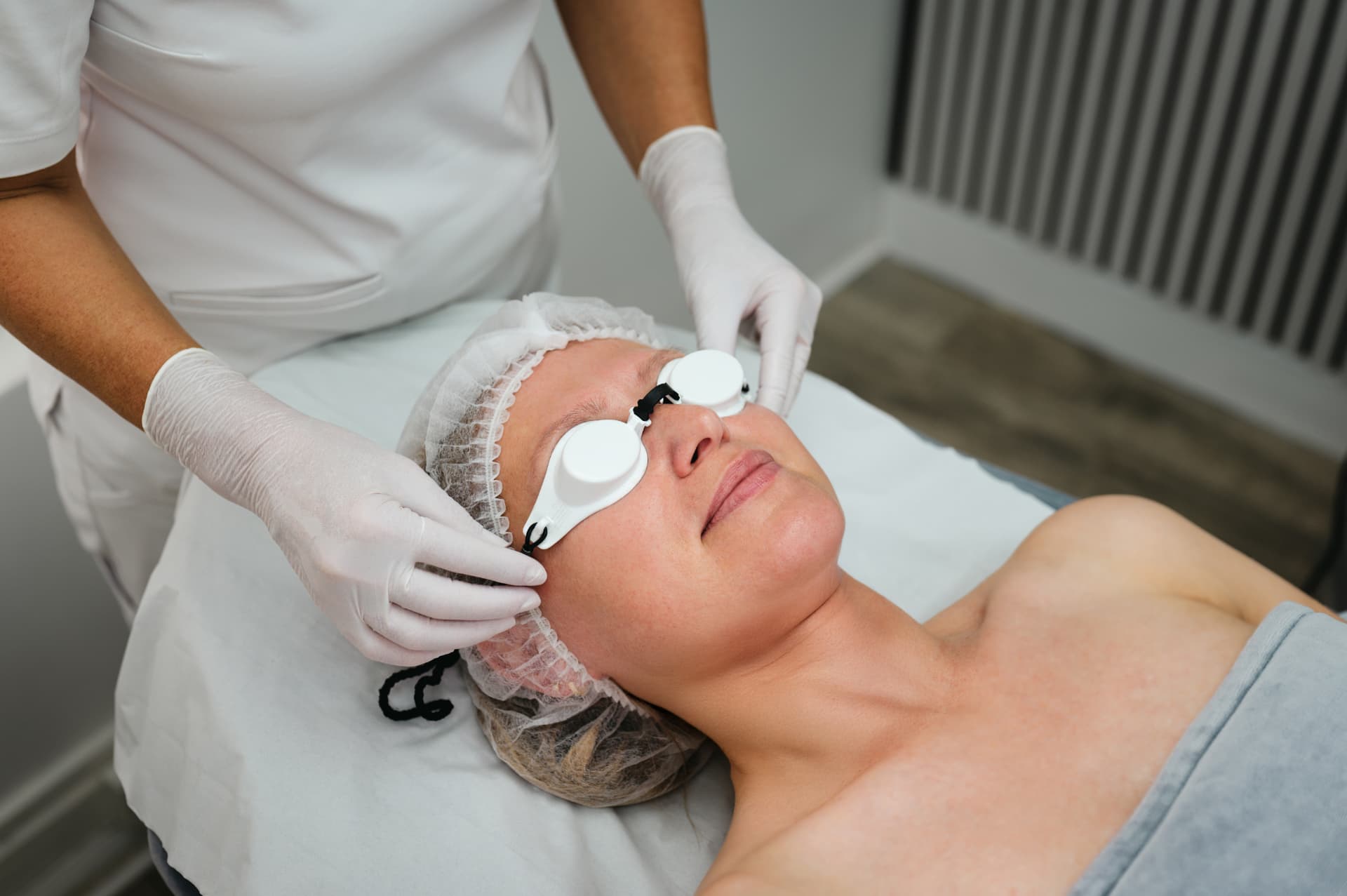
- 2.Cleanse and protective eyewear
- 3.Fractional laser passes over the area
- 4.Cooling and a protective barrier product
Aftercare
- Expect sunburn-like warmth for a few hours, and redness or pinpoint marks for about 5–7 days
- Wait until the next morning to wash, then use only the gentle cleanser and moisturiser advised; pat dry, never rub
- No make-up for at least five days, and no scrubs, retinoids, benzoyl peroxide or acids until healed
- Avoid hot baths, saunas, massage and strenuous exercise for 2–3 days
- Avoid smoking for 48 hours before and at least 7 days after treatment, as it slows healing
- Avoid sun exposure and sunbeds for at least one to two months, and wear a broad-spectrum SPF 50 daily
Who should not have this treatment
This list is not exhaustive. Please share your full medical history and medication at consultation; you may be asked for GP clearance.
- Pregnancy
- Recent tanning, sunbed use or fake tan in the area
- Photosensitising medication (please list all medication at consultation)
- History of keloid scarring
- Epilepsy triggered by light
- Active skin infection, eczema or open wounds in the area
- Active acne, cold sores or skin infection in the area (please mention any history of cold sores in advance)
- Isotretinoin (e.g. Roaccutane) within the last 6 months
- Diabetes, a bleeding disorder or slow wound healing, unless cleared by your doctor
Results and expectations
Every skin is different. Results vary between individuals and are not guaranteed. Natalia will explain what is realistic for you, how many sessions might be advisable and any risks before you go ahead.