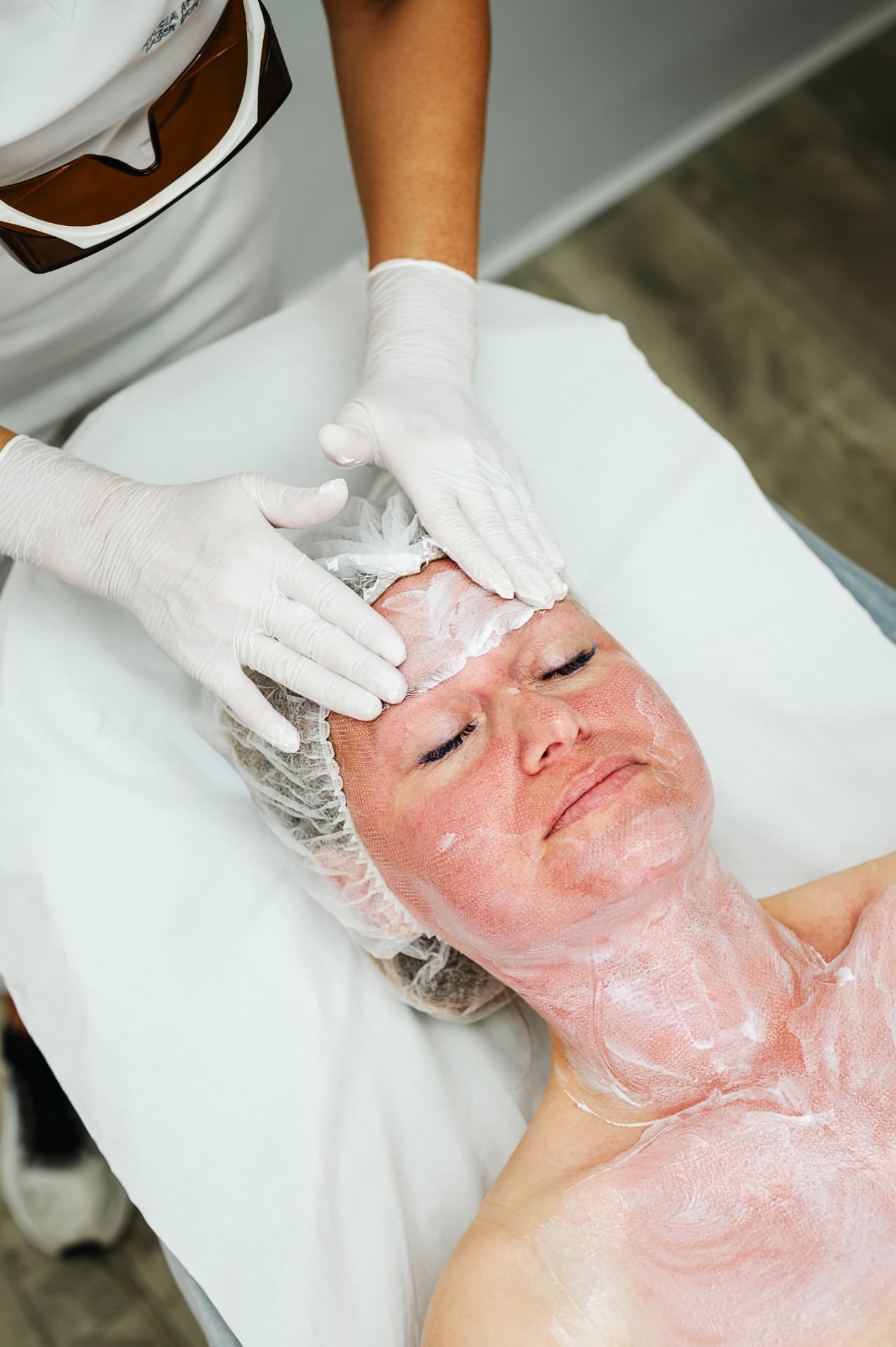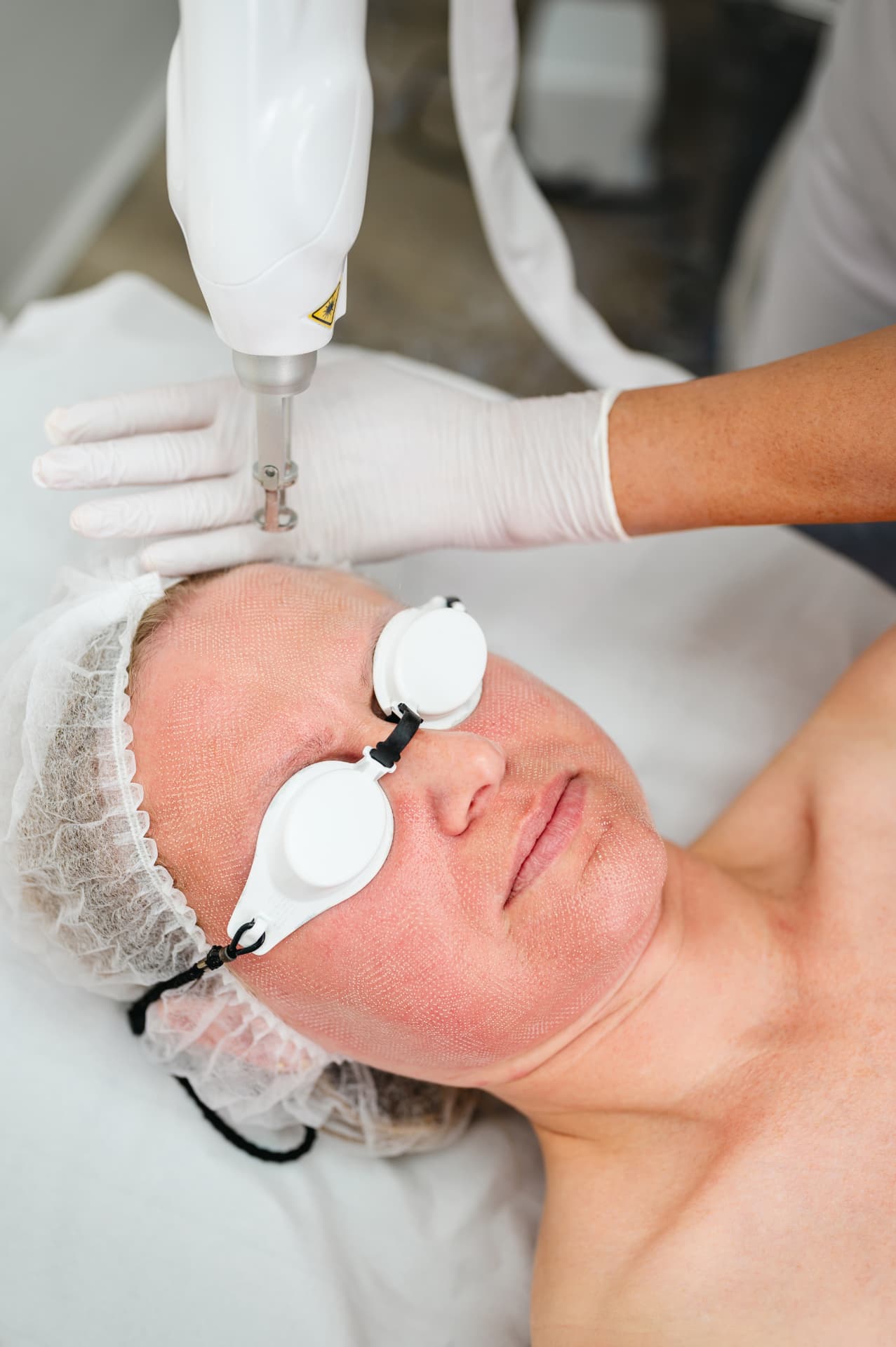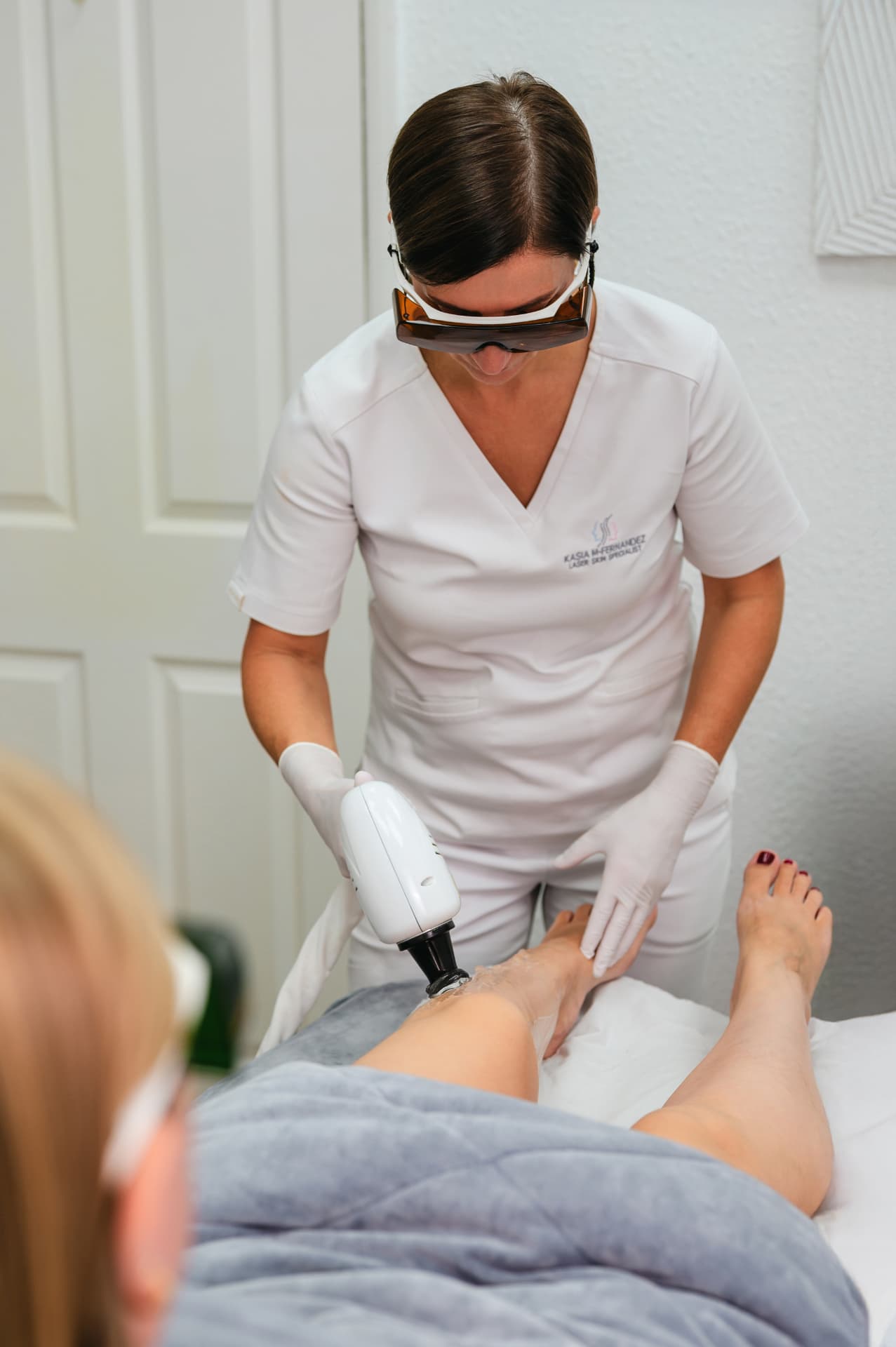
Laser hair removal uses light energy absorbed by the pigment in the hair to heat and disable the follicle. Because hair grows in cycles, only follicles in the active growth phase respond at each visit — which is why a course of sessions, spaced several weeks apart, is always needed.
Most clients see a meaningful, long-term reduction in hair rather than total removal. Hormones, hair colour and skin tone all affect how well hair responds, and occasional maintenance sessions are common. Natalia will be honest about what is realistic for you at your consultation and patch test.
What it may help with
- Reduction of unwanted hair on legs, underarms, bikini line, face and back
- Fewer ingrown hairs and less shaving irritation for many clients
- Smoother skin without the regrowth cycle of waxing
What happens during treatment
- 1.Consultation, medical questionnaire and patch test
- 2.Shave the area 24 hours before (no waxing or plucking for four weeks)
- 3.Treatment with protective eyewear; sensation is often described as a warm snap
- 4.Repeat sessions at the interval advised for the area
Aftercare
- Mild redness or raised follicles usually settle within hours
- No hot baths, saunas or vigorous exercise for 24–48 hours
- Avoid sunbeds and strong sun exposure, and wear a broad-spectrum SPF 30–50 daily.
- Shaving between sessions is fine; avoid waxing and plucking
Who should not have this treatment
This list is not exhaustive. Please share your full medical history and medication at consultation; you may be asked for GP clearance.
- Pregnancy
- Recent tanning, sunbed use or fake tan in the area
- Photosensitising medication (please list all medication at consultation)
- History of keloid scarring
- Epilepsy triggered by light
- Active skin infection, eczema or open wounds in the area
Results and expectations
Every skin is different. Results vary between individuals and are not guaranteed. Natalia will explain what is realistic for you, how many sessions might be advisable and any risks before you go ahead.